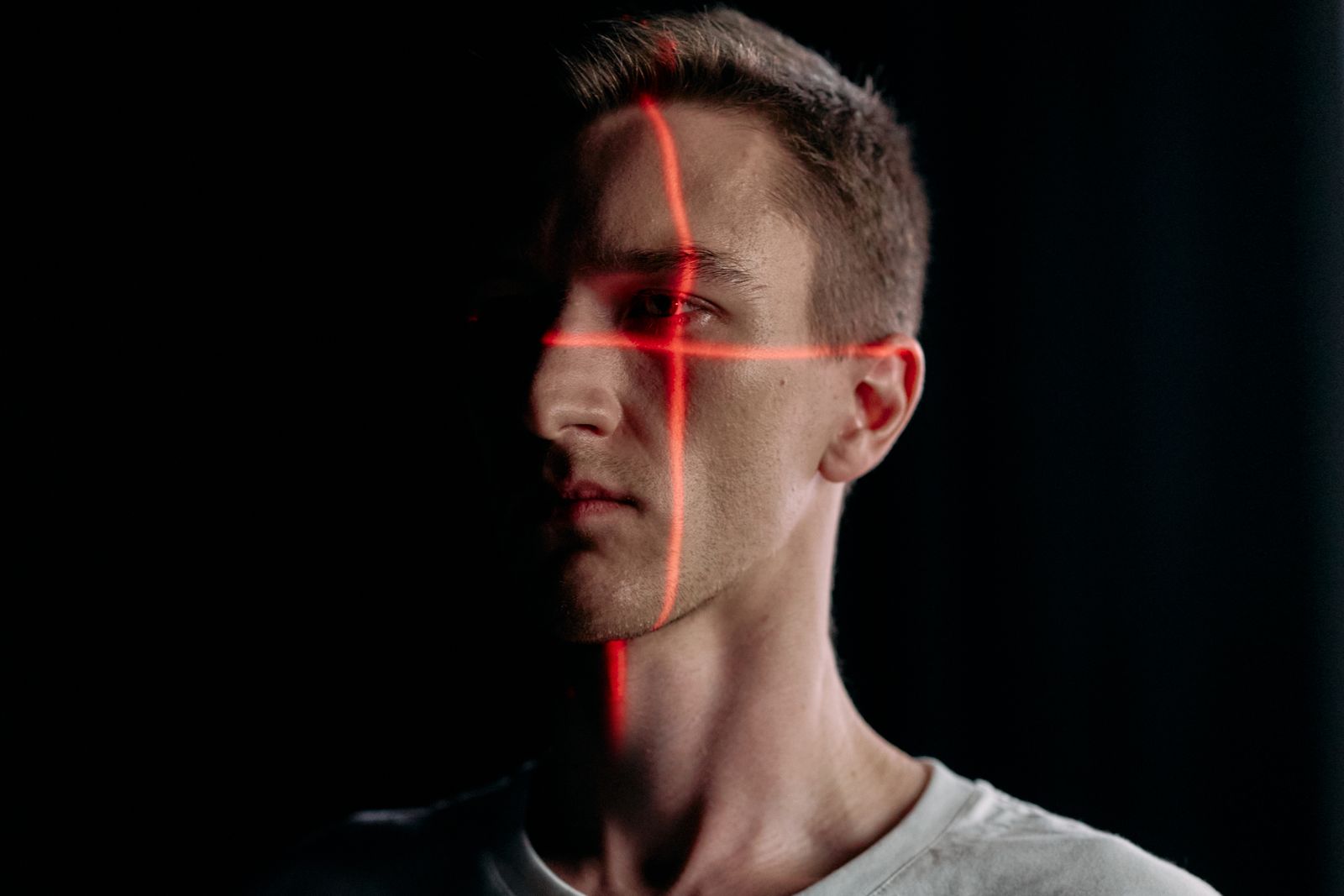
The checks we trusted are quietly failing
A bank we worked with ran a promotion that gave a small cash bonus to every new current account opened in a two-week window. Within the first hour, fraud analysts flagged a spike of applications that all passed the automated onboarding checks. Valid-looking names, working phone numbers, selfies that cleared the liveness camera, device fingerprints that looked distinct. On paper, thousands of new customers. In reality, a handful of operators driving an automation farm, harvesting the bonus a few hundred times over before anyone could react.
Nothing in that attack was exotic. Every control the bank had bought was doing exactly what the vendor promised. The problem is more fundamental: almost every defence we deploy to answer the question "is there a real, unique person on the other end of this session?" answers a different question instead, and attackers have learned to exploit the gap. AI has made that gap wide enough to drive a truck through.
This matters far beyond retail banking. Account opening, loyalty programmes, limited-inventory sales, API quotas, free trials, benefits portals, telecom SIM provisioning, any flow that assumes one request equals one human is now under pressure from cheap automation and convincing synthetic media. The identity stack most enterprises run was built for a world where forging a person was expensive. That assumption no longer holds.
Why every classic control eventually breaks
Think about what each of the standard controls actually measures. An IP address tells you which network a packet came from. A phone number tells you that someone, at some point, controlled a SIM. A device fingerprint describes a browser and hardware configuration. A CAPTCHA measures whether the client can solve a puzzle. None of these is the thing you care about. Each is a stand-in, a proxy, for "a distinct human being."
A proxy holds only as long as it stays scarce and hard to reproduce. The moment an adversary can acquire the proxy in bulk and cheaply, the control collapses. IP addresses rotate through residential proxy networks harvested from compromised routers and shady SDKs. Phone numbers are sold by the thousand from bulk SMS providers. Device fingerprints are randomised by anti-detect browsers built for exactly this purpose. CAPTCHA solving is a commodity service, and modern vision models clear many challenges without a human in the loop at all.
Authentication does not rescue you here, because authentication answers yet another question. A passkey, a one-time code, a face unlock, an OAuth token, all of these compare an incoming credential against a stored record and return a yes or no for a known account. That is possession and control of a credential. It says nothing about whether the same person is already sitting behind five hundred other accounts. Uniqueness across a population and authentication of a single account are different problems, and most stacks have plenty of the second and almost none of the first.
What "human" actually means to an identity system
The distinction that trips teams up is the difference between one-to-one and one-to-many matching. When your phone checks your face to unlock, it compares one fresh capture against one stored template. The comparison space is a single record, so even a modest per-comparison error rate works fine in practice. Verifying that a new applicant is not the same person as anyone in your existing base is a one-to-many problem, and the maths turns hostile fast. A false-match rate that looks excellent against one record produces a flood of collisions when you check against millions. Consumer-grade biometrics that feel rock solid on a handset fall apart at population scale.
Assurance is a level, not a yes or no
The useful mental model comes from NIST SP 800-63-3, which splits the problem into two axes. Identity Assurance Level (IAL) is about how strongly you have tied a digital account to a real-world person during onboarding. Authenticator Assurance Level (AAL) is about how strongly you prove, on each return visit, that the same person is back. Treating these separately is what lets you reason clearly. A deepfake attack at onboarding is an IAL failure. Credential stuffing against existing accounts is an AAL failure. They need different countermeasures, and conflating them is how gaps open up.
Alongside those, the payments world has its own hard requirement. Under PSD2 and the SCA rules that came with it, strong customer authentication means at least two independent factors drawn from knowledge, possession, and inherence, with dynamic linking that ties the authentication to a specific amount and payee. That framing, factors that are genuinely independent and bound to the transaction, is a good discipline to carry into any high-value flow, payments or not.
The fraud patterns hitting real environments right now
Synthetic identity fraud
This is the fastest-growing account-fraud category we see in financial services engagements, and it is precisely a one-to-many failure. Attackers assemble an identity from pieces: a real national ID number that belongs to someone with no credit history, a fabricated name, a controlled phone and email. The identity is not stolen from one victim, it is stitched together, so fraud checks that look for a compromised individual find nothing wrong. The account behaves normally for months, builds a limit, then busts out. Detecting it requires linking signals across accounts and over time, not scoring each application in isolation.
Deepfake-driven onboarding and voice bypass
Document and selfie onboarding assumed that presenting a convincing live face was hard. It is now cheap. Injection attacks feed a synthetic video straight into the camera pipeline, bypassing the physical sensor entirely, so a "live" selfie never came from a real camera at all. On the voice side, a few seconds of audio is enough to clone someone well enough to defeat naive voice biometrics and to run convincing vishing against a help desk. The countermeasure is presentation-attack detection built to the ISO/IEC 30107-3 standard, injection-attack detection that checks the integrity of the capture path, and a firm rule that voice recognition alone never authorises anything sensitive.
Bot-driven takeover and inventory abuse
Credential stuffing runs breached username and password pairs against your login at scale, and because password reuse is endemic, a small hit rate still yields thousands of compromised accounts. The same automation drains limited inventory, farms free trials, and scrapes pricing. These flows are not broken by a smarter password policy. They need bot management that scores behaviour and intent, rate controls that key off something harder to forge than an IP, and phishing-resistant authentication so a stuffed credential is worthless without the bound authenticator.
A layered model for proving a human is human
No single signal proves personhood. The workable approach is defence in depth, where you understand exactly what each layer proves and what it does not, and you stack them so an attacker has to beat all of them at once. The table below is the frame we use when we assess a client's onboarding and authentication flows.
Signal or controlWhat it actually provesHow it failsWhere it fits
IP reputation and geovelocity
Where traffic originates and whether it moves impossibly fast
Residential proxies, VPNs, mobile NAT
Coarse first-pass risk signal only
Device attestation (Play Integrity, App Attest, TPM)
The request came from genuine, unmodified hardware or app
Real devices at scale, emulator evasion
Raises the cost of automation farms
Document plus liveness (ISO/IEC 30107-3 PAD)
A government document was presented by a live face
Deepfake injection, presentation attacks
Onboarding identity proofing (IAL)
Phishing-resistant auth (FIDO2 / WebAuthn passkeys)
Possession of a bound authenticator, resistant to replay
Does not prove uniqueness across accounts
Return-visit authentication (AAL)
Behavioural biometrics
Interaction patterns consistent with a human and a returning user
Session replay, sophisticated automation
Continuous, passive risk scoring
Cross-account link analysis
Whether an "identity" is shared or fabricated
Needs data and tuning to avoid false links
Synthetic-identity and bust-out detection
Proof-of-personhood (emerging)
One verified unique human, without revealing who
Coverage, governance, still early
Sybil resistance at population scale
Read down that "what it actually proves" column and the design principle becomes obvious. Uniqueness, liveness, possession, and intent are four different properties. A flow that needs all four has to collect all four. Buying one more point product that covers the same property you already have adds cost without closing a gap.
The last row is worth watching. A new class of privacy-preserving proof-of-personhood systems has appeared, using high-entropy biometrics captured on controlled hardware, secret-shared across independent parties so no operator ever holds the raw reading, and scoped tokens that let a service enforce "one per human" without learning who the human is. The cryptography, secure multi-party computation and zero-knowledge scoped identifiers, is sound on paper. Whether coverage and governance mature enough for enterprise reliance is an open question, but it is the first serious attempt to build uniqueness infrastructure rather than another proxy, and it belongs on your roadmap radar.
AI agents change the question you are asking
For twenty years the working assumption was simple: automation is the adversary, so detect it and block it. That assumption is breaking. Users now delegate real work to AI agents. An assistant books travel, an agent watches for a product to come back in stock and buys it, a workflow submits forms on someone's behalf. When you block that traffic as a bot, you are blocking the automation your own customer is paying for.
So the question shifts from "is this a bot?" to "is this automation acting under the authority of a verified, accountable human, and within limits that human set?" That is a delegation problem, and it is the same shape as service-account and workload-identity governance we already do in cloud environments. An agent needs its own identity, credentials scoped to a narrow purpose, and actions that count against the responsible human's quota so one person cannot fan out into a thousand parallel agents to amplify abuse. In practice that means treating agent identity as a first-class part of your IAM design, with short-lived credentials, explicit scopes, auditable delegation, and a hard cap tied back to a proven human. Teams that get ahead of this will admit helpful agents safely while still shutting down the adversarial ones. Teams that do not will end up either blocking their own customers or waving through an automation free-for-all.
Where this meets compliance
None of this lives in a vacuum. The same controls that stop fraud are the ones auditors and regulators expect to see. Under PCI-DSS 4.0, phishing-resistant multi-factor authentication and strong access control are explicit requirements, not nice-to-haves, and the standard's anti-automation expectations line up neatly with bot management. KYC and AML obligations make identity proofing at onboarding a legal duty, which is exactly where deepfake resistance now earns its keep. Map the whole programme to the NIST Cybersecurity Framework so identity assurance sits inside Protect and Detect rather than floating as a standalone project, and use the CIS Controls, particularly the account and access-management controls, as the concrete implementation checklist. An ISO 27001 information security management system gives you the governance wrapper to prove the controls are designed, operated, and reviewed rather than merely purchased. Done well, one identity-assurance investment satisfies fraud, security, and compliance stakeholders at the same time, which is usually the argument that gets the budget approved.
A practical checklist
If you want to pressure-test your own environment, this is the sequence we walk through on an assessment:
- Separate IAL from AAL in your design, and write down which control provides each. Gaps hide in the conflation.
- Confirm liveness vendors are tested against ISO/IEC 30107-3 and, critically, that they perform injection-attack detection, not only presentation-attack detection.
- Move return-visit authentication to phishing-resistant passkeys (FIDO2 / WebAuthn) and retire SMS one-time passwords for anything high value.
- Deploy bot management that scores behaviour and intent, and rate-limit on signals harder to rotate than an IP address.
- Add cross-account link analysis so synthetic identities and bust-out patterns surface before losses land.
- Define an agent-identity model now: scoped credentials, short lifetimes, delegated authority tied to a verified human, and per-human quotas.
- Map every control to PCI-DSS 4.0, NIST CSF, and CIS Controls, and record the mapping so the audit trail writes itself.
- Rehearse the failure. Run a red-team exercise using a deepfake selfie and a cloned voice against your own onboarding and help desk, and fix what gets through.
How Aydahwa Enterprise Can Help
We have spent 25 years building and defending identity and access systems in environments where getting it wrong is expensive, across banking, telecom, and critical national infrastructure. Our work is grounded in real standards and credentials, including ISO 27001, PCI-DSS, SOC 2, the NIST Cybersecurity Framework, CIS Benchmarks, and Microsoft Cybersecurity Architect Expert certification, so the recommendations you get are ones we have implemented and stood behind, not slideware.
If the patterns in this article sound familiar, we can help you assess where your current identity assurance actually stands, design a layered model that separates uniqueness, liveness, possession, and intent, and build the agent-identity governance you will need as delegated automation grows. Start with our free cybersecurity self-assessment or run through the cybersecurity readiness checklist to get a quick read on your posture. For hands-on work, our cybersecurity services cover identity, fraud, and threat defence, our cloud services extend the same controls into cloud and workload identity, and our managed IT support keeps them running day to day. When you are ready to talk specifics, get in touch and we will scope it around your environment and your budget.